
 |
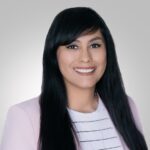
Nina AcostaNina Acosta is a Ph.D. student in the Department of Ethnic Studies at the University of California, Riverside. She earned her M.A. in General/Experimental Psychology from California State University, San Bernardino. Her master’s thesis examined intergroup prosocial behavior and the psychology of representation. Drawing from her professional experience as a victim advocate in tribal communities, Nina’s current research explores how internalized cultural schemas, colonial legacies, and systemic barriers shape the experiences, responses, and healing practices of Mexican American survivors of sexual violence. |
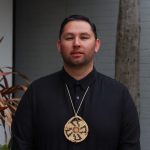 |
Paul G AguirrePaul G Aguirre is a Shamala Chumash community member from The Santa Ynez Band of Chumash Indians, and a first year M.A. student in the Department of Ethnic Studies at The University of California, Riverside. He holds a Bachelor’s in American Indian Studies from San Diego State University. |
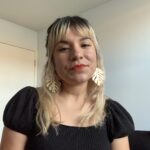 |
Eliana BuenrostroB.A. Chicana/o Studies and Gender Studies, University of California, Los Angeles Eliana Buenrostro is a Ph.D. student in the Department of Ethnic Studies at the University of California, Riverside. She received her M.A. in Latin American and Latino Studies from the University of Illinois at Chicago in 2020. Her M.A. paper entitled “Destined to Fuck Up: Los Illegals, Chicano Punk and the Immigration Politics and Art of 1980s Los Angeles” uses oral history to recount the activist cultural production of the Chicano punk band Los Illegals, during a period of mass deportations in the United States. Her ongoing research examines the criminalization, immigration, and deportation of Chicanes and Latines through the lens of music and other forms of cultural production. She is a recipient of the Cota Robles Fellowship and the Crossing Latinidades Mellon Fellowship. As a member of the Latinx Sound Culture Studies Working Group through the Crossing Latinidades Humanities Initiative, she moderated a talk on “Chicana Punk Epistemologies” with scholars who are redefining the field of punk studies. Research Interests: punk music, alternative subcultures, youth subcultures, immigration, state violence, oral history |
 |
Valerie M ChaconBA Native American Studies University of California Riverside Valerie Chacon is a Payómkawichum scholar. At UC Riverside she is an Ethnic Studies PhD student living, learning, and working in her Native homelands. In her teaching life at UC Riverside, Valerie takes a radical Indigenous queer feminist approach that informs her teaching praxis to facilitate a learning community respective of positionality, reciprocity, and responsibility to community. As a student, Valerie takes seriously her role in embodying Native presence in the colonial land-grant institution of UCR. Research interests |
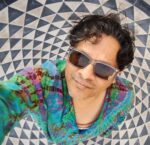 |
Gregory EsparzaBA History and Chicana/o Studies, University of California Los Angeles Singer songwriter, storyteller, educator, lead vocals (1998-2022) for two seminal 1960s East L.A. groups, Cannibal and the Headhunters and Thee Midniters. Since the Fall of 2023 he lectured in Chicana/o Latina/o Studies at CSULA and in Ethnic Studies at Fullerton College since Spring 2025. He recently joined the UCLA World Latin Music Ensemble. His research centers Chicana/o/x music makers through autohistoria teoria frameworks, drawing from oral histories and more. He explores ways sonic disruptors rattle systems of racism, oppression, patriarchy, interracial tensions, and hostile institutions. He ruminates upon how communities of listeners and music makers are both transformed by cultural productions. Interests in Sound Studies, race, class, gender, sexuality, masculinity, emasculation, decoloniality, critiquing Western value systems, find him expanding upon his theoretical concepts of Sonic Nepantlera/o/x, Re-Spiriting songs, harmonic healing, harmonic consciousness, and looking out for other global sonic disruptors and healers. |
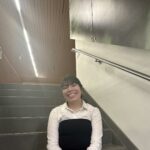 |
Kimberly Alvarez FloresKimberly Alvarez Flores is a first-generation college graduate and a first-year M.A. student in the Department of Ethnic Studies. She received her Bachelor’s degree in Anthropology from California State University, Chico. Research interests: muxe identity, gender/gender roles, and identity formation |
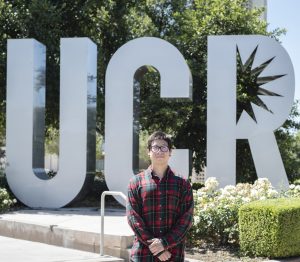 |
Pedro A FreireBA Political Science and Philosophy of Law, Brooklyn College of The City University of New York Pedro Freire’s academic interests revolve around critical theory, Latinx studies, and global labor studies, with a focus on critical political economy, unequal exchange, world systems, dependency theory, imperialism, and anti-imperialism. His scholarly inquiry aims to comprehend the distinctive position of Latinx laborers in the Inland Empire in relation to laborers in the global South in this present conjuncture of logistics and rentier capitalism. His primary interest lies in exploring the transformative potentiality of a 21st-century socialist internationalism that unites Latinx workers in the global North with radical labor movements in the Third World. He has been actively involved in qualitative research through his work with the Latino and Latin American Studies Research Center and the Inland Empire Labor and Community Center. Notably, he has played a leading role in a transnational labor survey with nearly 500 respondents, conducted in collaboration with the Latino and Latino American Studies Research Center and the Universidad Nacional Autónoma de México (UNAM), focusing on Mexican migrant labor in the Inland Empire. Additionally, Pedro has conducted numerous interviews with workers across different economic sectors in the Inland Empire region, including caregivers, service sector workers, warehouse workers, and logistics workers. Pedro’s research interests are deeply rooted in his personal background as the son of Ecuadorian and Taiwanese migrants and his involvement in labor struggles in New York City and California. He aspires to become a professor at a major research university. He is an associate editor and member of the editorial board for the Journal of Labor and Society, formerly known as WorkingUSA. |
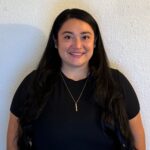 |
Kristina GlassB.A., Psychology, California State University, Long Beach Kristina Glass (Cherokee Nation) is a first-year Master’s student in Ethnic Studies at the University of California, Riverside. She was raised in Merced, California, and is an active member of the at-large Cherokee communities in the southern California area, leading cultural workshops and facilitating a language group for beginners. Motivated by her experience as an adult Cherokee language learner, Kristina will focus her graduate studies on Native language reclamation. In addition, her research will also include Indigenous identity fraud, which harms Native America broadly and often impacts Cherokee communities. |
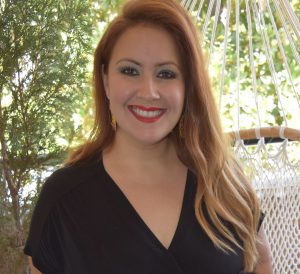 |
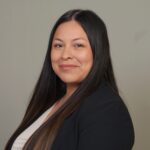
Morayma Flores-HiginioB.A. Human Development |
 |
Jazmin GarciaA.S Paralegal/Legal studies |
 |
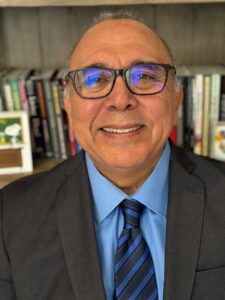
DeVin JohnsonA retired Marine with 22 years of service, DeVin brings leadership and operational experience to every endeavor. Holding a MA in History, he is a dedicated advocate for inclusion and hard work. A single dad, and an active member of his community, he leads a run club and operates a non-profit, Miles 4 Meals. His passion for health extends to his role as a Hyrox ambassador and workout enthusiast. With a commitment to service, he looks forward to pursuing his PhD in Ethnic Studies. In previous work, he argued Reconstruction worked, but was overturned by white supremacy, particularly at the local, state and federal levels . As a Mellon Fellow, DeVin researched the economic fears whites had of African Americans in Philadelphia from 1800-1834 which led to enactment of racist legislation, increased segregation and racial violence/riots. His research ideas at UCR focus on power dynamics at the local, state and federal level, assessing their role in perpetuating or challenging racial inequality (specifically for African Americans), from the redemption era to the second civil rights movement. |
 |
Dennis LopezMy research interest is to study the access of undocumented immigrant Mexican and Latino students to California public colleges and universities and their academic success in those institutions. I will explore the impact of changes in immigration law and policy and education law and policy for undocumented Mexican and Latino students in these three periods: 1. From the Plyler vs. Doe (1982) decision of the U.S. Supreme Court through the 1991 overturning of the Leticia A. vs. UC Regents and CSU Trustees decision (1985); 2. From the Bradford vs. UC Regents (1991) decision and the Association of American Women vs. CSU Trustees (1992) rulings to the passage of California’s AB 540 in 2001; and 3. The period of undocumented Mexican and Latino student activism from 2001 through 2024 featured the struggle for the DREAM Act in Congress, the advocacy for California legislation for state financial aid, and the implementation of Deferred Action for Childhood Arrivals (DACA). |
 |
Michael MadrigalB.A., Social Relations, University of California, Riverside |
 |
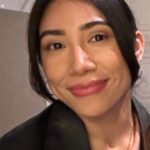
Jenni MartinezJenni Martinez is a Ph.D. student in the department of Ethnic Studies. She is a proud & devoted daughter of deported Mexican parents, a first generation college graduate and an award winning teaching assistant 💁🏻♀️ Jenni seeks to better understand the ways in which deportation as a form of state violence permeates through every facet of the lives of those affected. Her work focuses on exploring the ontological changes of deportees, deportee specific trauma & its temporalities and how deportation is an active necropolitical agent of the state. Research Interests: deportation, temporalities, necro politics, death, immigration, affect, ontology, phenomenology, Mexican/ Chicanx feminist epistemologies, art-based ethnographies |
 |
Nathaly L OrtizM.A., Women & Gender Studies, San Francisco State University Nathaly Ortiz is a Ph.D. student in the Department of Ethnic Studies at the University of California, Riverside. She was raised in Pittsburg, California and received her Master’s in Women & Gender Studies from San Francisco State University. Her M.A. thesis looked at how structural racism and exploitative labor during World War II shaped the East Bay Area landscape. The Port Chicago Naval Magazine in Concord, California—the largest weapons facility on the West Coast during WWII—served as the site of examination. She analyzed archived oral histories, court proceedings, naval service records, a memorial, and WWII propaganda posters. Her research builds upon this work by looking at historical resistance to U.S. militarism and how it has shaped the restructuring of state power and the landscape. |
 |
Ramon PinedaB.A. Anthropology, San José State University |
 |
Larry W Smith |
 |
Diana SolisB.A. Gender, Ethnicity, and Multicultural Studies, California State Polytechnic University, Pomona Diana Solis is a Ph.D. student in the Department of Ethnic Studies at the University of California, Riverside. She is from La Puente in the San Gabriel Valley (SGV) and is a first-generation college student. She is a former McNair Scholar and Sally Casanova Pre-Doctoral Scholar. Her M.A. thesis examined muxerista circles as spaces of collective healing and community knowledge production. Her current research builds on this work by examining muxerista circles as healing-centered pedagogical practices within Ethnic Studies and Gender Studies classrooms. |
|
Amanda SotoAmanda Soto is a PhD student in the Department of Ethnic Studies at the University of California, Riverside, where she also completed her Bachelor’s degree in the same field. As a nontraditional community college transfer student, her research interests seek to explore how underrepresented, marginalized students navigate the transfer process, focusing on examining institutional barriers and the relationship between race and space. |