Colloquium: “The Mer-Warrior: A Fantastic Afro-Nostalgic” by Jalondra A. Davis

Colloquium: “The Mer-Warrior: A Fantastic Afro-Nostalgic” by Jalondra A. Davis

Events

Join the UCR Department of Ethnic Studies for our colloquium speaker series:

“The Mer-Warrior: A Fantastic Afro-Nostalgic”

By Jalondra A. Davis

Monday, February 10
1:00-2:00 p.m.
INTN 3023

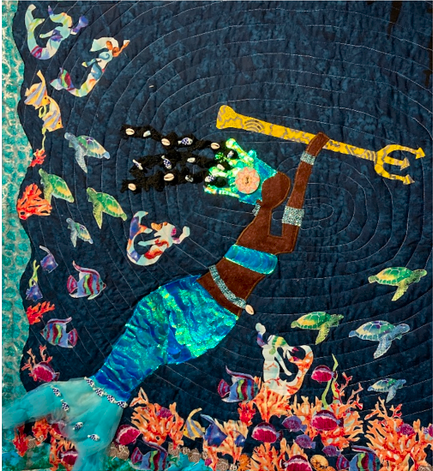
In contrast to mainstream representations of the mermaid as an innocent, hyperfeminine girl-culture waif, a hypersexualized, commercialized object, or, more rarely, a tempting, predatory, carnivorous siren, Black mermaid stories, narratives, and performers offer entirely different dimensions to this fantastical figure that are remarkably consistent across literary, visual, and other popular culture. Building upon Badia Ahad-Legardy’s concept of afro-nostalgia, this presentation will focus on the mermaid as a warrior figure, and the way in which Black storytellers and creatives center the kinds of histories usually used to exclude blackness from fantasy landscapes—captivity, enslavement, and ongoing racial violence—as actually especially entitling Black communities to mermaid stories.


Jalondra A. Davis is an Assistant Professor of English at UC Riverside, has published on speculative fiction in various venues, including Journal of the Fantastic in the Arts, Science Fiction Studies, Misrepresentations of Black Womanhood, Routledge Anthology of Co-Futurisms, and Los Angeles Review of Books. Her monograph manuscript, Merfolk and Black Being in Water, analyzes the historically specific worldbuilding of Black literature, art, and performance featuring human-aquatic hybrids, with a focus on how such narratives interrogate Western modernity, humanism, and the Anthropocene. A current Hellman Society of Scholars Fellow with an Ethnic Studies Ph.D. from UCR, she also hosts the Merwomanist Podcast.
Colloquium: Indigenous Futures: Oaxaqueñx Youth Encuentro and New Voices in the California Central Valley by Nancy Morales

Colloquium: Indigenous Futures: Oaxaqueñx Youth Encuentro and New Voices in the California Central Valley by Nancy Morales

Events

Join the Ethnic Studies Department for our colloquium speaker series:

“Indigenous Futures: Oaxaqueñx Youth Encuentro and New Voices in the California Central Valley”

By Nancy Morales

Monday, December 2, 1:00–2:00 pm in INTN 3023

Based on a five-year Native ethnography with participant observation of fifteen Oaxaqueñx Youth Encuentro events, and twenty-four interviews with 1.5 (U.S.-raised) and second generations (U.S.-born) of Mixtec and Zapotec women and queer youth, Morales argues for more expansive definitions of Indigenous governance, such as tequio (community labor) to account for the political participation of Indigenous women and Indigiqueer youth that challenge static nationalist notions of Indigeneity.

Nancy Morales is an Indigenous (Zapotec) feminist scholar-activist and Native ethnographer. She earned her Ph.D. from the Department of Feminist Studies at UC Santa Barbara in June 2023 and is a UC President’s Postdoctoral Fellow in the Department of Anthropology at UC Santa Cruz. She is currently working on a short documentary and book manuscript, Oaxacan Pride: Women and Indigiqueer Youth’s Struggles for Sovereignty.

You can download a PDF flyer here.

Colloquium: Unbroken Spirit: The Rise of the Pelican Bay Short Corridor and California SHU Prison Hunger Strikes by Angélica Camacho

Colloquium: Unbroken Spirit: The Rise of the Pelican Bay Short Corridor and California SHU Prison Hunger Strikes by Angélica Camacho

Events

Join the Ethnic Studies Department for our colloquium speaker series:

“Unbroken Spirit: The Rise of the Pelican Bay Short Corridor and California SHU Prison Hunger Strikes”

By Angélica Camacho

Monday, November 4, 1:00–2:00 pm in INTS 3023

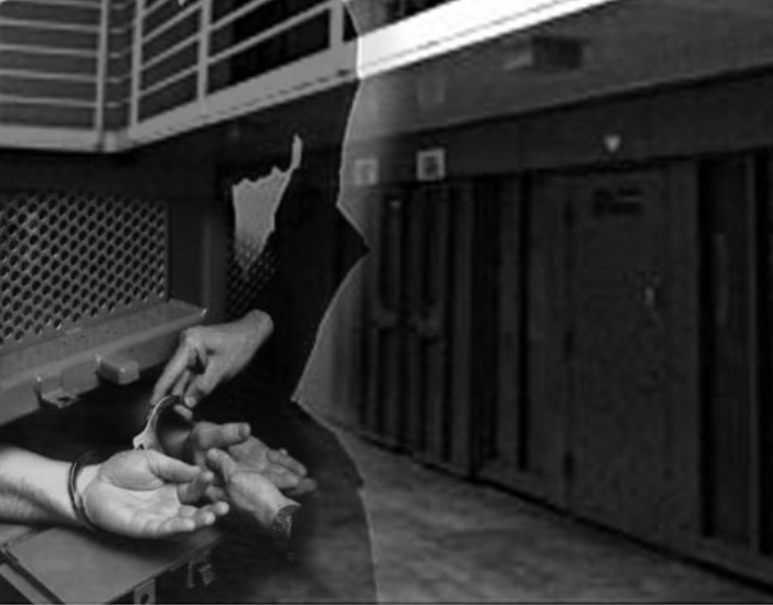
The 2011 and 2013 Pelican Bay and California SHU prison hunger strikes marked the beginning of a contemporary prisoner-led movement that would expose the brutality and corruption of the California Department of Corrections. I argue that the theorizing emanating from this historical prisoner and family-led movement provides us valuable insights for anti-prison organizing that can help us transform our way out of over 50 years of tough-on-crime legislation. Additionally, these hunger strikes remind us of the strength and power wielded by a common insurrectionary and unbroken spirit. Whereas even after years of being submitted to one of the most repressive sites in the world, incarcerated people adamantly refused to collaborate with their captors. Instead, they chose camaraderie across racial and geographical lines, reclaiming their bodies, and weaponizing their words to craft new possibilities for the future.

Angélica Camacho (Ph.D., Ethnic Studies, UC Riverside, 2017) is Assistant Professor of Criminal Justice Studies at San Francisco State University. Her current research documents the 2011-2013 Pelican Bay California prisoner hunger strikes and the subsequent uprising of their families in opposition to the conditions of confinement in Secure Housing Units (SHU).

Colloquium: X es mi Amor: On Latino Queer Spaces and Preserving the Mundane

Colloquium: X es mi Amor: On Latino Queer Spaces and Preserving the Mundane

Events

Join the Ethnic Studies Department for our colloquium speaker series:

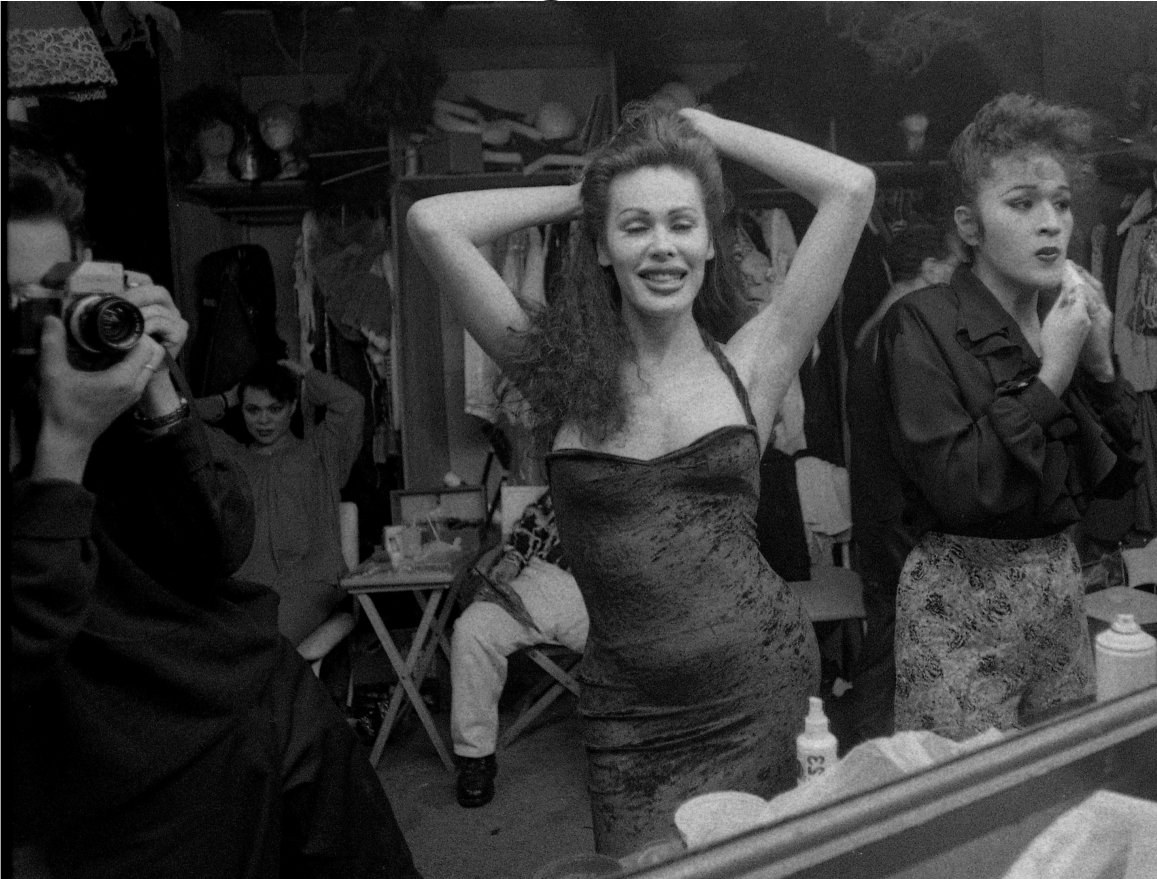
X es mi Amor: On Latino Queer Spaces and Preserving the Mundane”

By Reynaldo Rivera

Monday, October 14, 1:00–2:00 pm in INTS 3023 (Please note the room change)

Reynaldo Rivera is a photographer whose work has been exhibited in Los Angeles, Mexico City, New York City, and Berlin. His photos are in the permanent collections of MOCA, LACMA, and The Getty Museum (L.A.), and of MoMA and The Whitney Museum of American Art (NYC). He is the author of Provisional Notes for a Disappeared City (2020), which the Los Angeles Times called “an alluring yet candid record of interconnected communities.”