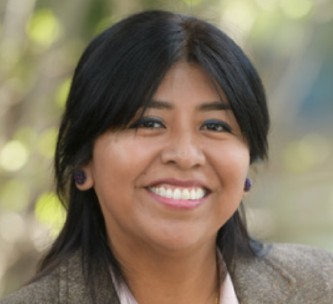
Colloquium: Indigenous Futures: Oaxaqueñx Youth Encuentro and New Voices in the California Central Valley by Nancy Morales

Colloquium: Indigenous Futures: Oaxaqueñx Youth Encuentro and New Voices in the California Central Valley by Nancy Morales

Events

Join the Ethnic Studies Department for our colloquium speaker series:

“Indigenous Futures: Oaxaqueñx Youth Encuentro and New Voices in the California Central Valley”

By Nancy Morales

Monday, December 2, 1:00–2:00 pm in INTN 3023

Based on a five-year Native ethnography with participant observation of fifteen Oaxaqueñx Youth Encuentro events, and twenty-four interviews with 1.5 (U.S.-raised) and second generations (U.S.-born) of Mixtec and Zapotec women and queer youth, Morales argues for more expansive definitions of Indigenous governance, such as tequio (community labor) to account for the political participation of Indigenous women and Indigiqueer youth that challenge static nationalist notions of Indigeneity.

You can download a PDF flyer here.
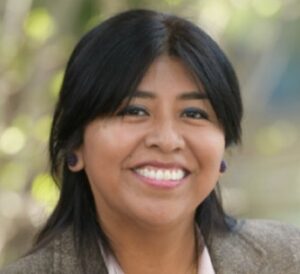
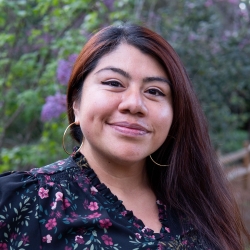
Nancy Morales Nancy Morales is an Indigenous (Zapotec) feminist scholar-activist and Native ethnographer. She earned her Ph.D. from the Department of Feminist Studies at UC Santa Barbara in June 2023 and is a UC President’s Postdoctoral Fellow in the Department of Anthropology at UC Santa Cruz. She is currently working on a short documentary and book manuscript, Oaxacan Pride: Women and Indigiqueer Youth’s Struggles for Sovereignty.
Colloquium: Unbroken Spirit: The Rise of the Pelican Bay Short Corridor and California SHU Prison Hunger Strikes by Angélica Camacho

Colloquium: Unbroken Spirit: The Rise of the Pelican Bay Short Corridor and California SHU Prison Hunger Strikes by Angélica Camacho

Events

Join the Ethnic Studies Department for our colloquium speaker series:

“Unbroken Spirit: The Rise of the Pelican Bay Short Corridor and California SHU Prison Hunger Strikes”

By Angélica Camacho

Monday, November 4, 1:00–2:00 pm in INTS 3023

The 2011 and 2013 Pelican Bay and California SHU prison hunger strikes marked the beginning of a contemporary prisoner-led movement that would expose the brutality and corruption of the California Department of Corrections. I argue that the theorizing emanating from this historical prisoner and family-led movement provides us valuable insights for anti-prison organizing that can help us transform our way out of over 50 years of tough-on-crime legislation. Additionally, these hunger strikes remind us of the strength and power wielded by a common insurrectionary and unbroken spirit. Whereas even after years of being submitted to one of the most repressive sites in the world, incarcerated people adamantly refused to collaborate with their captors. Instead, they chose camaraderie across racial and geographical lines, reclaiming their bodies, and weaponizing their words to craft new possibilities for the future.

Angelica Camacho Angélica Camacho (Ph.D., Ethnic Studies, UC Riverside, 2017) is Assistant Professor of Criminal Justice Studies at San Francisco State University. Her current research documents the 2011-2013 Pelican Bay California prisoner hunger strikes and the subsequent uprising of their families in opposition to the conditions of confinement in Secure Housing Units (SHU).
Colloquium: X es mi Amor: On Latino Queer Spaces and Preserving the Mundane

Colloquium: X es mi Amor: On Latino Queer Spaces and Preserving the Mundane

Events

Join the Ethnic Studies Department for our colloquium speaker series:

“X es mi Amor: On Latino Queer Spaces and Preserving the Mundane”

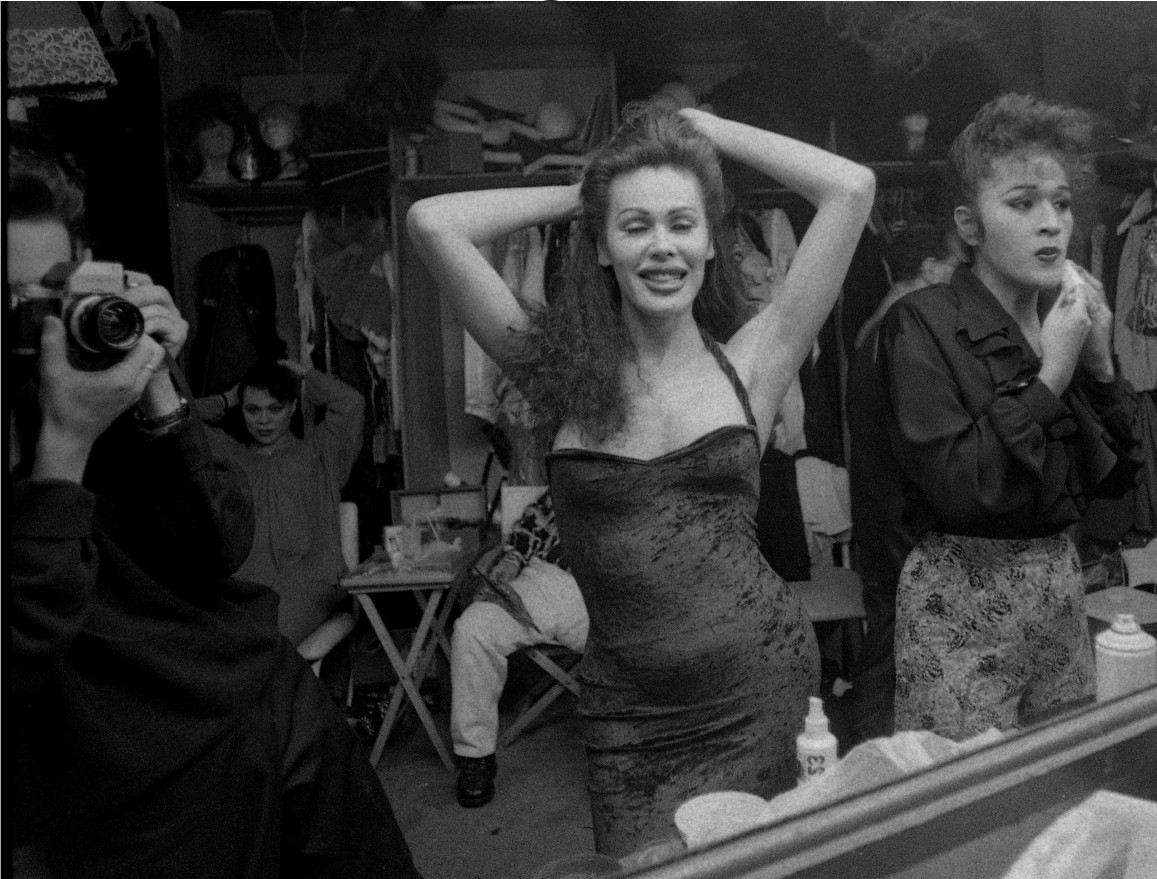
By Reynaldo Rivera

Monday, October 14, 1:00–2:00 pm in INTS 3023 (Please note the room change)

Reynaldo Rivera is a photographer whose work has been exhibited in Los Angeles, Mexico City, New York City, and Berlin. His photos are in the permanent collections of MOCA, LACMA, and The Getty Museum (L.A.), and of MoMA and The Whitney Museum of American Art (NYC). He is the author of Provisional Notes for a Disappeared City (2020), which the Los Angeles Times called “an alluring yet candid record of interconnected communities.”

Recent and Upcoming Art Shows featuring Prof. Gerald Clarke

Recent and Upcoming Art Shows featuring Prof. Gerald Clarke

Events Faculty News

2024 has been a busy year for Professor Gerald Clarke! Here are some of Professor Clarke’s recent and upcoming shows:

Gerald Clarke: The Door is Open (May 24 – September 1, 2024, Breck Create, Breckenridge, CO)

Desert Forest: Life with Joshua Trees (September 7 – December 29, 2024, Museum of Art and History, Lancaster, CA)

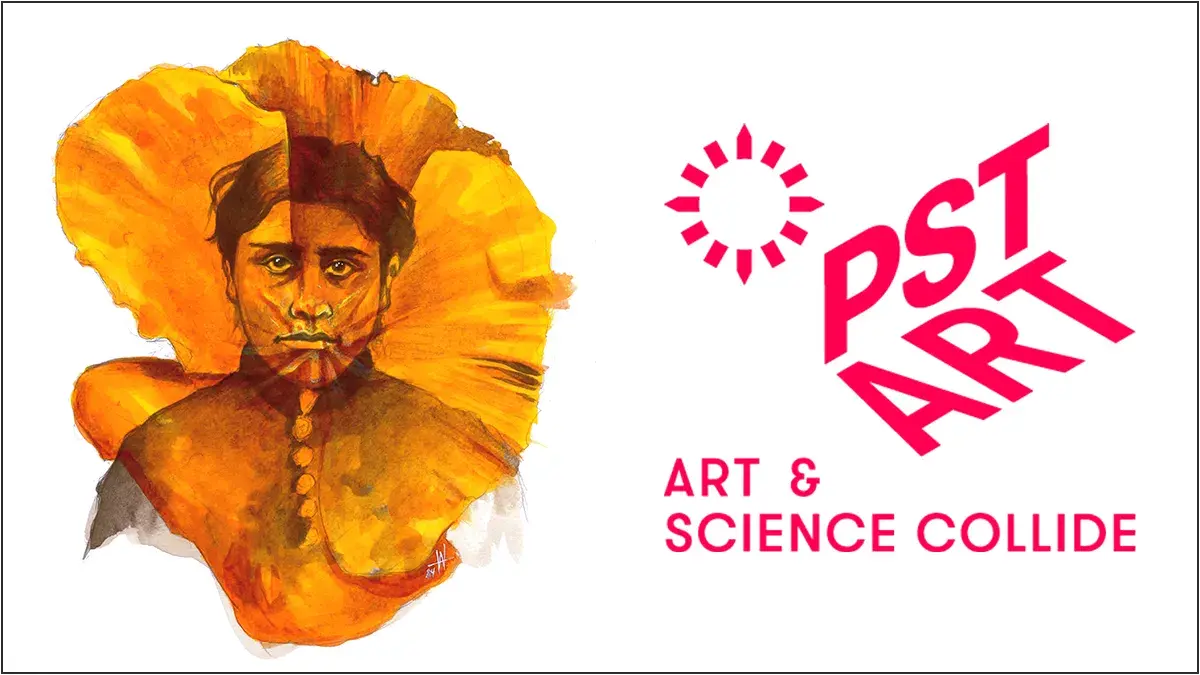
Fire Kinship: Southern California Native Ecology and Art (January 12 – July 13, 2025, PST ART, Fowler Museum at UCLA, Los Angeles, CA)


Professor Clarke will also be giving a lecture in October:

Portland Monuments Project Symposium (October 11 – 12, 2024, Converge 45, Portland, OR)


Prof. Clarke’s Artist Statement (via Breck Create)

I aspire not to romanticize the subjects or content of my work. I strive to “keep it real” and have found that my best works are inspired by my personal experiences. Beer cans, branding irons, and gourd rattles represent aspects of my reality. These materials reflect who I am and not how the mainstream might understand the contemporary Native American experience. They represent my community as well: a community that struggles with various issues but that also laughs, loves, and continues to evolve.

While my work may not appear “traditional,” it is part of a continuation of creative responses to the world that the Cahuilla have exercised since ancient times. I believe the strict adherence to traditional materials and authentic forms has been forced onto Indigenous expression by Euro-American belief systems that view art and culture through a monetary lens. The result is a narrow conception of Native American art that imposes an eighteenth-century aesthetic and transforms it into a commodity.

As you view my work, I ask that you do not simply compare or contrast it to “traditional Native American art,” but that you understand my work exists within a spectrum of Indigenous expression that is simultaneously ancient and contemporary. I’m proud and humbled to contribute to the Indigenous Intellectual Tradition. I am not simply a contemporary artist that happens to be Indian. I am a Native American artist. I am a Cahuilla artist.

Sep 24: Native American Pedagogies in Remote Teaching

Sep 24: Native American Pedagogies in Remote Teaching

Events

Native American Pedagogies in Remote Teaching: An Initial Discussion led by Prof. Wesley Leonard

Thursday, September 24 at 2:30pm to 4:00pm

More info

Please join the Reclamation and Native American Communities Faculty Commons for an informal discussion on implementing Native American and other Indigenous pedagogies in the current context of remote teaching. Through a series of informal presentations and discussion, we will consider how we can beneficially draw from Indigenous educational traditions in how we design and teach our courses. The final part of the session will turn to a discussion of ideas for a possible 2020-2021 series of events on this topic.

Indigenous pedagogies might be defined as those that emerge from and center the peoplehood, cultures, values, and intellectual traditions of Indigenous communities in relation to the particular places those communities come from. Though pedagogical methods vary across Native American and other Indigenous communities, common are approaches that focus on the whole individual in relational contexts and on the related idea that knowledge is produced and interpreted in the context of relationships. Specific examples of Indigenous pedagogies include teaching through storytelling and through engagement with land.

Registration required:  https://ucr.zoom.us/meeting/register/tJUocO2hrjsiG9SJepFFuHMRAH3OhKte_