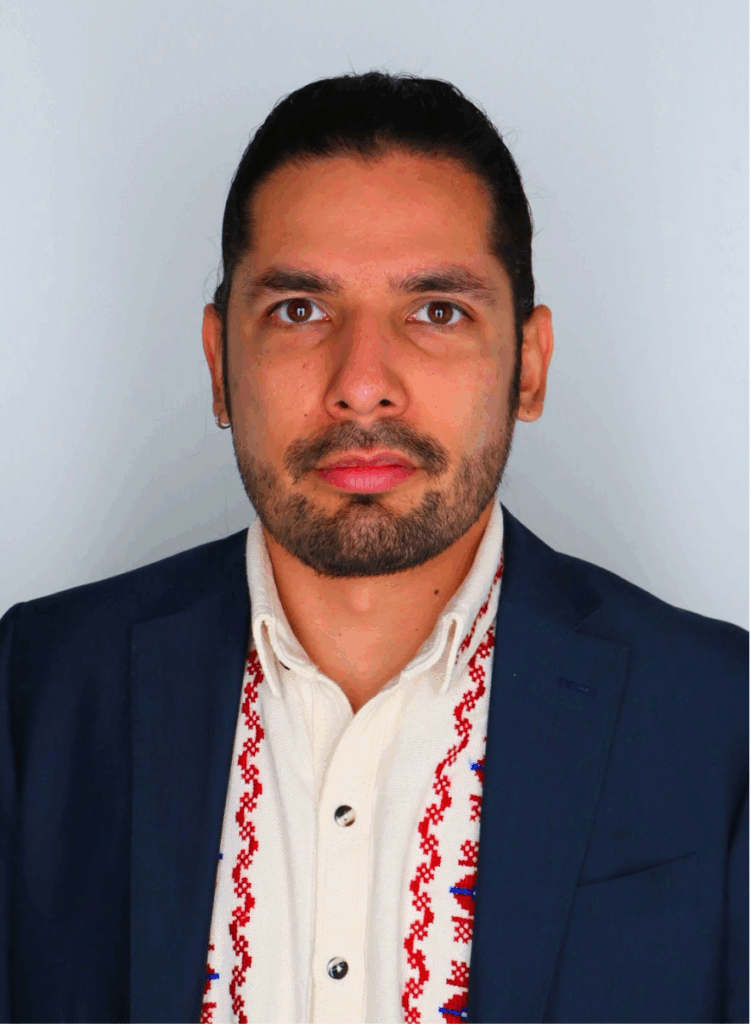
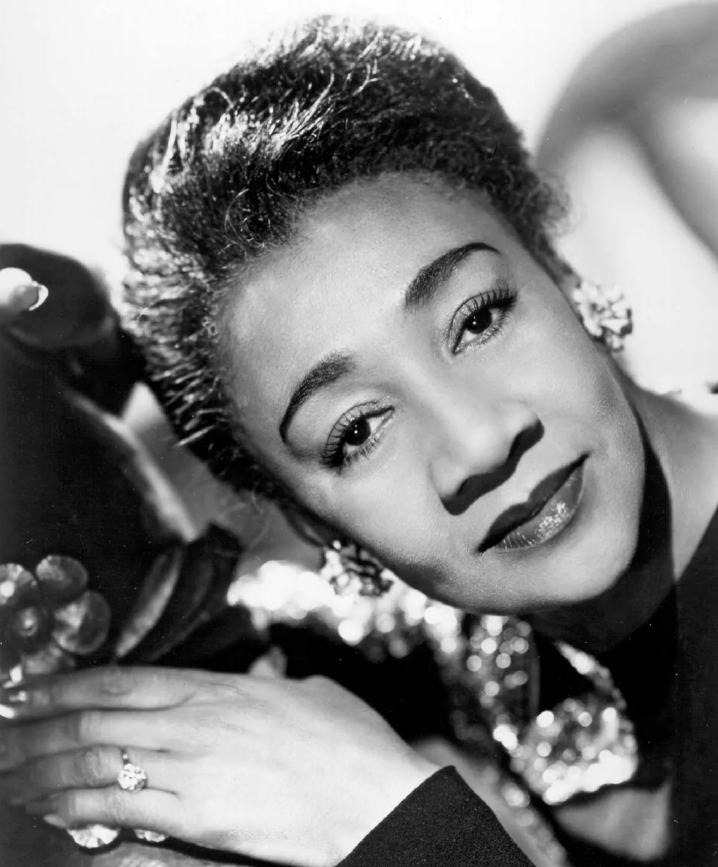
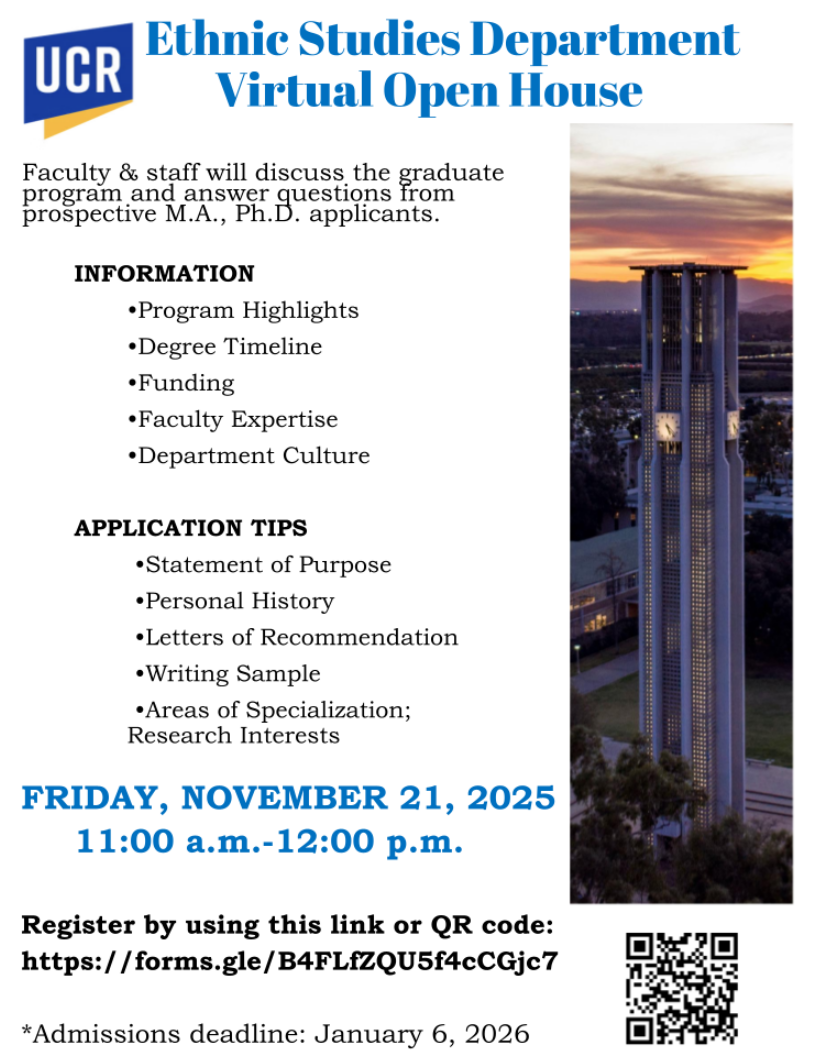
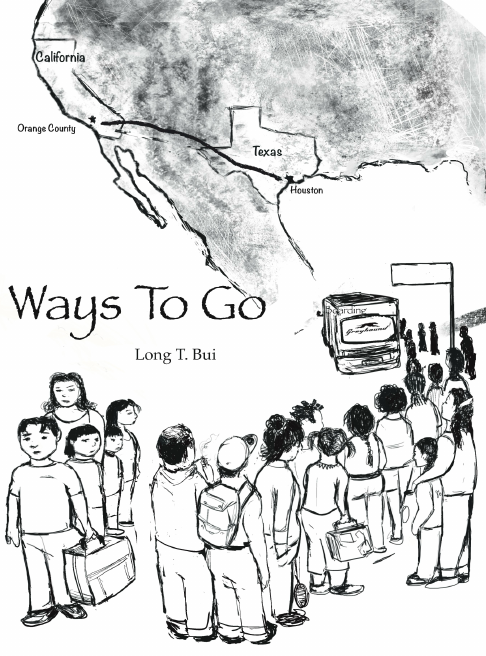
Colloquium: “Graphic Vietnam: Visualizing Memoirs, Memories, and Militarism” by Long T. Bui

Colloquium: “Graphic Vietnam: Visualizing Memoirs, Memories, and Militarism” by Long T. Bui

Events

Join the UCR Department of Ethnic Studies for our colloquium speaker series:

“Graphic Vietnam: Visualizing Memoirs, Memories, and Militarism”

By Long T. Bui

Monday, October 20, 2025
1:00-2:00 p.m.
CHASS INTS 1113

This talk presents my graphic memoir in progress. Using ethnic studies research and frameworks as the basis for art, I recognize the creative aspects of doing scholarly intellectual work (and vice versa). My book utilizes the power of comics and a powerful visual medium to draw out the many strands of the Vietnam War, previously considered America’s longest war, linking them with other protracted American conflicts such as race wars, drug wars, gang wars, the wars on poverty and terror. Although this year marks the 50th anniversary of the “end” of the Vietnam war, I illustrate, through my refugee family’s story, that no war is really over.

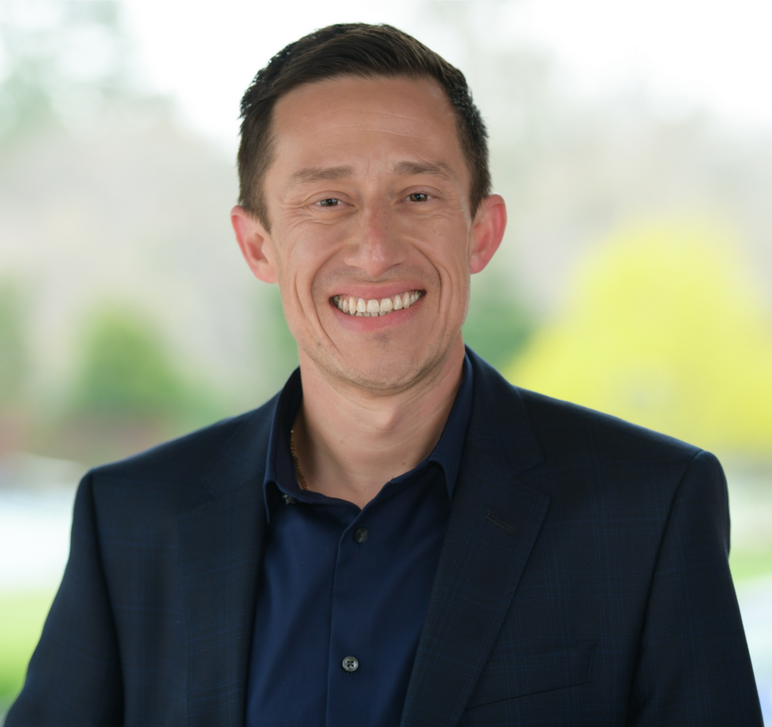
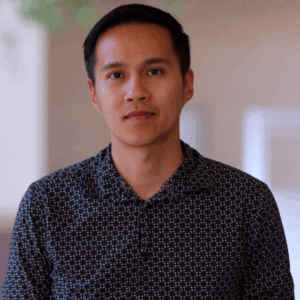
Long T. Bui is Professor of Global and International Studies at the University of California, Irvine.

He is the author of books such as Returns of War: South Vietnam and the Price of Refugee Memory (2018), Model Machines: A History of the Asian as Automaton (2022), and Viral World: Global Relations during the COVID-19 Pandemic (2024).

Bui earned a Ph.D. in Ethnic studies from UC San Diego and was a UC postdoctoral fellow in Ethnic Studies at UC Riverside.

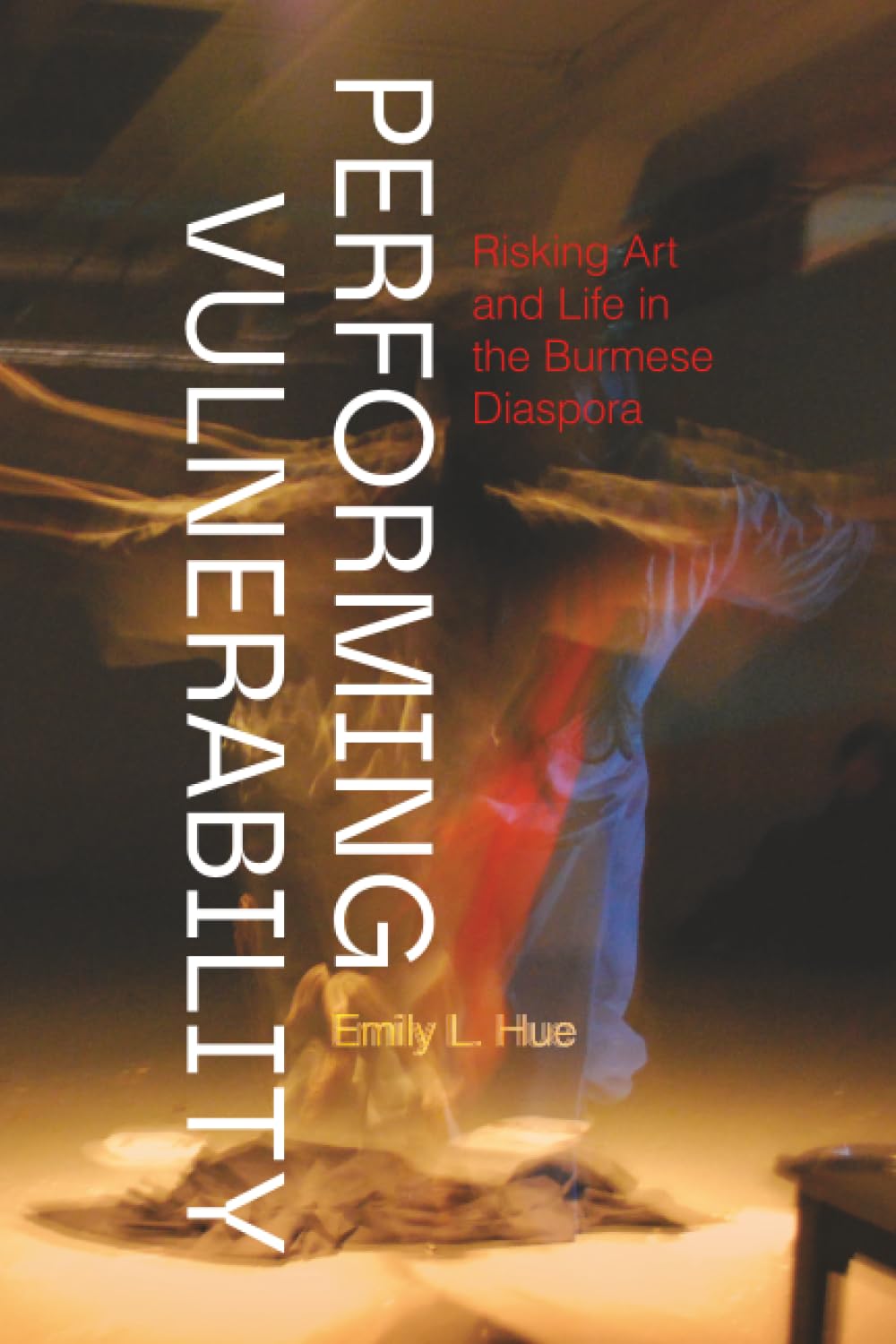
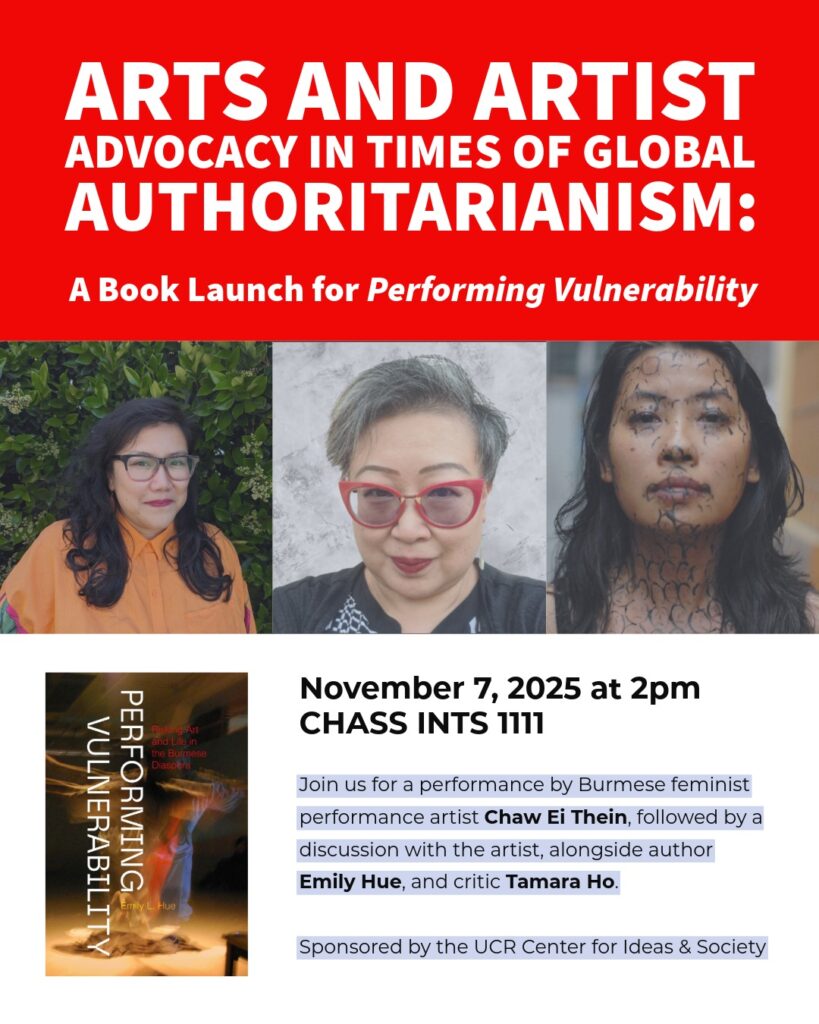
Arts and Artist Activism in Times of Global Authoritarianism: A Book Launch for Performing Vulnerability

Arts and Artist Activism in Times of Global Authoritarianism: A Book Launch for Performing Vulnerability

Events

The Center for Ideas and Society Presents

A Book Launch for Performing Vulnerability

Featuring Emily Hue, Tamara Ho, and Chaw Ei Thein

Friday, November 7, 2025
2:00–5:30 p.m.
CHASS INTS 1111

Performing Vulnerability: Risking Art and Life in the Burmese Diaspora is a groundbreaking exploration of how diasporic Burmese artists navigate the intricate intersections of art, politics, and humanitarianism. It provides a critical examination of the economic and social value placed on representations of suffering of artists living in the aftermath of military rule. This event invites further dialogue on the ethical implications of this value within the global arts and humanitarian markets in the US and beyond.

We will open with a performance by Burmese feminist performance artist Chaw Ei Thein and follow with a discussion with the artist, alongside author Emily Hue, and critic Tamara Ho. Topics discussed include the current political moment in Myanmar post-coup as well as how immigrant and exiled artists work against “doubled” authoritarian afterlives in the United States. Reception to follow.

Tentative Event Schedule

2:00 – 2:45 Performance: Chaw Ei Thien
2:45 – 3 pm intermission
3 to 4:15 pm Roundtable Discussion: Emily Hue, Tammy Ho, Chaw Ei Thein
4:15- 5:30 Q&A and reception

Speakers

Chaw Ei Thein: “I was born in 1969 in Yangon, Myanmar (Burma). I graduated with LL.B (Law) in 1994. I has started art at an early age through I had received numerous national and international art prizes and awards. My father is an artist and art teacher Pathein Maung Maung Thein. He is my art teacher and mentor. My artistic practices are diverse and I am working as a painter and a performance artist.”

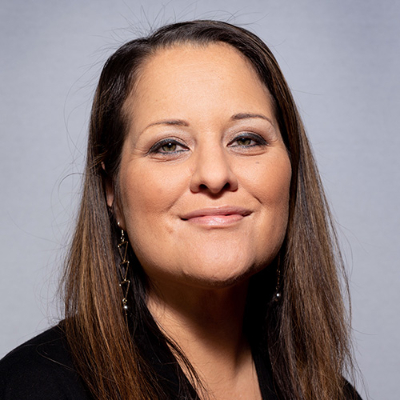
Tamara C. Ho is an Associate Professor of Gender & Sexuality Studies. She earned her Ph.D., in Comparative Literature from University of California, Los Angeles.

Emily Hue is an Associate Professor of Ethnic Studies and core faculty in Southeast Asian Text, Ritual, Performance (SEATRiP), at the University of California, Riverside. She earned her Ph.D. in American Studies from the Department of Social and Cultural Analysis at New York University.

Joan Mitchell Foundation Announces the  2025 Joan Mitchell Fellows, Including Prof. Gerald Clarke

Joan Mitchell Foundation Announces the 2025 Joan Mitchell Fellows, Including Prof. Gerald Clarke

Faculty News

Fifteen US-based artists will each receive $60,000 over the five-year span of the program, which also provides learning, peer engagement, and network-building opportunities.

NEW YORK, NY – August 13, 2025 – The Joan Mitchell Foundation is pleased to announce the recipients of the 2025 Joan Mitchell Fellowships: 15 US-based artists working in the evolving fields of painting and sculpture. The artists, who hail from 11 states and range in age from 30 to 74, will each receive $60,000 in direct funding, distributed over five years alongside professional development, peer engagement, and network-building programs. This year’s Fellows announcement coincides with the Foundation’s year-long celebration of Joan Mitchell’s centennial year and a major exhibition, on view for the month of August, marking 10 years of the Joan Mitchell Center residency program in New Orleans. The Fellowship awards represent a $900,000 monetary commitment to the 15 artists, augmented by more than $400,000 in non-monetary services offered over the five years of the program.

The 2025 Joan Mitchell Fellows are:
Gerald Clarke, Anza, CA
Cathy Della Lucia, Boston, MA
Bob Dilworth, Providence, RI
Nancy Friedemann-Sánchez, Lincoln, NE
Sahar Khoury, Oakland, CA
Sammy Seung-min Lee, Denver, CO
Brenda Mallory, Portland, OR
Suchitra Mattai, Los Angeles, CA
Troy Montes Michie, Los Angeles, CA
Sara Rahbar, Great Neck, NY
Eric-Paul Riege, Gallup, NM
Juvana Soliven, Honolulu, HI
Linda Rotua Sormin, New York, NY
Lan Tuazon, Chicago, IL
Anthony White, Seattle, WA


Gerald Clarke (b. 1967, lives in Anza, CA), an enrolled citizen of the Cahuilla Band of Indians, draws on his community’s everyday experience to create conceptual artworks that exist within a spectrum of Indigenous expression that is simultaneously ancient and contemporary.

Read the full press release here.

Colloquium: “The Cahuilla Pedagogical Grammar Project: Results and Outcomes from An Indigenous Language Research Methods (ILRM) Approach to Writing Pedagogical Grammars for Indigenous Communities” by Ray Huaute

Colloquium: “The Cahuilla Pedagogical Grammar Project: Results and Outcomes from An Indigenous Language Research Methods (ILRM) Approach to Writing Pedagogical Grammars for Indigenous Communities” by Ray Huaute

Events

Join the UCR Department of Ethnic Studies for our colloquium speaker series:

“The Cahuilla Pedagogical Grammar Project: Results and Outcomes from An Indigenous Language Research Methods (ILRM) Approach to Writing Pedagogical Grammars for Indigenous Communities”

By Ray Huaute

Monday, May 19, 2025
1:00-2:00 p.m.
INTN 3023

With specific examples provided from my postdoctoral project, this talk presents an alternative model for research on a language that is also conducted for, with, and by the language-speaking community. In this framework, the “by” can include linguistic research conducted by an Indigenous community researcher as the Principal Investigator (PI), and in a manner that is relationally accountable to the language-speaking community. Centering linguistic research around community-specific language reclamation goals and values allows researchers to identify what might best support local language revitalization efforts.

Ray Huaute (Chumash, Cahuilla), a UC President’s Postdoctoral Fellow in the Ethnic Studies Department at UC Riverside, earned a B.A. in Native American Studies at UCR, an M.A. in Native American Linguistics from the University of Arizona, and a Ph.D. in Linguistics from UC San Diego.

Ray won an Endangered Language Documentation Programme grant in 2019 to support linguistic fieldwork for his doctoral research on the Desert dialect of Cahuilla spoken on the Torres Martinez Desert Cahuilla Indian Reservation.

His postdoctoral research project utilizes original data from contemporary speakers of Cahuilla, along with archival documentation.

Colloquium: “The Desirable Conduit: Cinematic Fantasies of Latinx Sexuality and Labor” by Richard T. Rodríguez

Colloquium: “The Desirable Conduit: Cinematic Fantasies of Latinx Sexuality and Labor” by Richard T. Rodríguez

Events

Join the UCR Department of Ethnic Studies for our colloquium speaker series:

“The Desirable Conduit: Cinematic Fantasies of Latinx Sexuality and Labor”

By Richard T. Rodríguez

Monday, March 12, 2025
1:00-2:00 p.m.
INTN 3023

Drawn from my book in progress, The Desirable Conduit: Cinematic Fantasies of Latinx Sexuality and Labor, this talk focuses on John Butler’s 2018 dramedy Papi Chulo. Concerned with the simultaneous demand for Latino male sexuality and labor in contemporary queer cinema, focusing on what I identify as “bad cinema” helps glean insight in representational spaces to assess the social, sexual, economic, and psychic currencies afforded to and by Latino male sexuality.

Dr. Richard T. Rodríguez is Professor of English at the University of California, Riverside. He is the author of Next of Kin: The Family in Chicano/a Cultural Politics and A Kiss Across the Ocean: Transatlantic Intimacies of British Post-Punk and
U.S. Latinidad
, both published by Duke University Press and finishing a book of poems titled Exemplars & Accomplices.
2025 Ethnic Studies Undergraduate Research Symposium

2025 Ethnic Studies Undergraduate Research Symposium

Announcements Events

Let Me Define My Terms: An Undergraduate Research Symposium

May 15, 2025, 8:30 am–4:30 pm (reception to follow)
Breakfast, lunch, and afternoon refreshments will be served

UCR Alumni Center
3701 Canyon Crest Dr, Riverside, CA 92521

This symposium will showcase how undergraduate students are conducting meaningful research on race, gender, and sexuality. It empowers students to effectively communicate the significance of their work within academic circles and, crucially, within the broader context of American society. Twelve undergraduate participants will present original research related to ethnic studies on the topic of their choosing.

This one-day symposium will feature Dr. Alejandro Villalpando as keynote speaker, and four moderated panels of undergraduate research papers selected from a highly competitive pool of applicants representing UCR and other colleges and universities from across the country.


RSVP by May 2, 2025 to attend the conference. All are welcome!

Colloquium: “When You’re a Priest, Even Healers Work for the Devil: Settler Persecution and Nahua Resistance in Colonial Mexico” by Edward Anthony Polanco

Colloquium: “When You’re a Priest, Even Healers Work for the Devil: Settler Persecution and Nahua Resistance in Colonial Mexico” by Edward Anthony Polanco

Events

Join the UCR Department of Ethnic Studies for our colloquium speaker series:

“When You’re a Priest, Even Healers Work for the Devil: Settler Persecution and Nahua Resistance in Colonial Mexico”

By Edward Anthony Polanco

Monday, March 3, 2025
1:00-2:00 p.m.
INTN 3023

Dr. Edward Anthony Polanco is an Assistant Professor in the Department of History at Virginia Tech in Blacksburg, VA, which occupies the Monacan Indian Nation’s territory. He also serves as the Director of the Indigenous Studies Program at Virginia Tech. Dr. Polanco received his Ph.D. in History (with a minor in Anthropology) at the University of Arizona.

He is author of Healing Like Our Ancestors: The Nahua Tiçitl, Gender, and Settler Colonialism in Central Mexico, 1535-1650 (University of Arizona Press, 2024) and various articles that pertain to health, the body, and Mesoamerica.

Colloquium: “Sleepless: Racial patterns of Sleep Hygiene in a County Jail” by Michael Lawrence Walker

Colloquium: “Sleepless: Racial patterns of Sleep Hygiene in a County Jail” by Michael Lawrence Walker

Events

Join the UCR Department of Ethnic Studies for our colloquium speaker series:

“Sleepless: Racial patterns of Sleep Hygiene in a County Jail”

By Michael Lawrence Walker

Monday, February 24
1:00-2:00 p.m.
INTS 1109 (note the room change)

Problems associated with sleep hygiene are among the more unexamined issues in carceral organizations. We know that poor sleep hygiene is associated with increased risks for developing mood disorders, heart disease, diabetes, hypertension, and other physiological problems. In this study, I use ethnographic data from a Southern California county jail system to show: (a) poor sleep hygiene is endemic penal living; (b) jail mental health staff were ill-equipped to address the interplay of sleep hygiene and mental health for penal residents; (3) the jail as an organizational setting patterned resident dreams into themes; and (4) carceral organizations stratify poor sleep hygiene across racial groups. I offer the outline of a sensitizing scheme for the sociology of dreams.


Michael Lawrence Walker earned his Ph.D. in 2014 from the University of California, Riverside. In 2017, he joined the University of Minnesota-Twin Cities where he is the Beverly and Richard Fink Professor in Liberal Arts in the Department of Sociology. He is the author of Indefinite: Doing Time in Jail, which won the 2022 C. Wright Mills Book Award and the Charles H. Cooley Award for Best Recent Book. Walker’s research focuses on race relations, social exchange, punishment, identities, and time. His current project is a book length examination of the socioemotional landscape of law enforcement work.

Colloquium: “The Mer-Warrior: A Fantastic Afro-Nostalgic” by Jalondra A. Davis

Colloquium: “The Mer-Warrior: A Fantastic Afro-Nostalgic” by Jalondra A. Davis

Events

Join the UCR Department of Ethnic Studies for our colloquium speaker series:

“The Mer-Warrior: A Fantastic Afro-Nostalgic”

By Jalondra A. Davis

Monday, February 10
1:00-2:00 p.m.
INTN 3023

In contrast to mainstream representations of the mermaid as an innocent, hyperfeminine girl-culture waif, a hypersexualized, commercialized object, or, more rarely, a tempting, predatory, carnivorous siren, Black mermaid stories, narratives, and performers offer entirely different dimensions to this fantastical figure that are remarkably consistent across literary, visual, and other popular culture. Building upon Badia Ahad-Legardy’s concept of afro-nostalgia, this presentation will focus on the mermaid as a warrior figure, and the way in which Black storytellers and creatives center the kinds of histories usually used to exclude blackness from fantasy landscapes—captivity, enslavement, and ongoing racial violence—as actually especially entitling Black communities to mermaid stories.


Jalondra A. Davis is an Assistant Professor of English at UC Riverside, has published on speculative fiction in various venues, including Journal of the Fantastic in the Arts, Science Fiction Studies, Misrepresentations of Black Womanhood, Routledge Anthology of Co-Futurisms, and Los Angeles Review of Books. Her monograph manuscript, Merfolk and Black Being in Water, analyzes the historically specific worldbuilding of Black literature, art, and performance featuring human-aquatic hybrids, with a focus on how such narratives interrogate Western modernity, humanism, and the Anthropocene. A current Hellman Society of Scholars Fellow with an Ethnic Studies Ph.D. from UCR, she also hosts the Merwomanist Podcast.
Colloquium: Indigenous Futures: Oaxaqueñx Youth Encuentro and New Voices in the California Central Valley by Nancy Morales

Colloquium: Indigenous Futures: Oaxaqueñx Youth Encuentro and New Voices in the California Central Valley by Nancy Morales

Events

Join the Ethnic Studies Department for our colloquium speaker series:

“Indigenous Futures: Oaxaqueñx Youth Encuentro and New Voices in the California Central Valley”

By Nancy Morales

Monday, December 2, 1:00–2:00 pm in INTN 3023

Based on a five-year Native ethnography with participant observation of fifteen Oaxaqueñx Youth Encuentro events, and twenty-four interviews with 1.5 (U.S.-raised) and second generations (U.S.-born) of Mixtec and Zapotec women and queer youth, Morales argues for more expansive definitions of Indigenous governance, such as tequio (community labor) to account for the political participation of Indigenous women and Indigiqueer youth that challenge static nationalist notions of Indigeneity.

Nancy Morales is an Indigenous (Zapotec) feminist scholar-activist and Native ethnographer. She earned her Ph.D. from the Department of Feminist Studies at UC Santa Barbara in June 2023 and is a UC President’s Postdoctoral Fellow in the Department of Anthropology at UC Santa Cruz. She is currently working on a short documentary and book manuscript, Oaxacan Pride: Women and Indigiqueer Youth’s Struggles for Sovereignty.

You can download a PDF flyer here.