
Eradicating the e-Word: Musings on Myaamia Language Reclamation, by Prof. Wesley Leonard

Eradicating the e-Word: Musings on Myaamia Language Reclamation, by Prof. Wesley Leonard

Faculty News

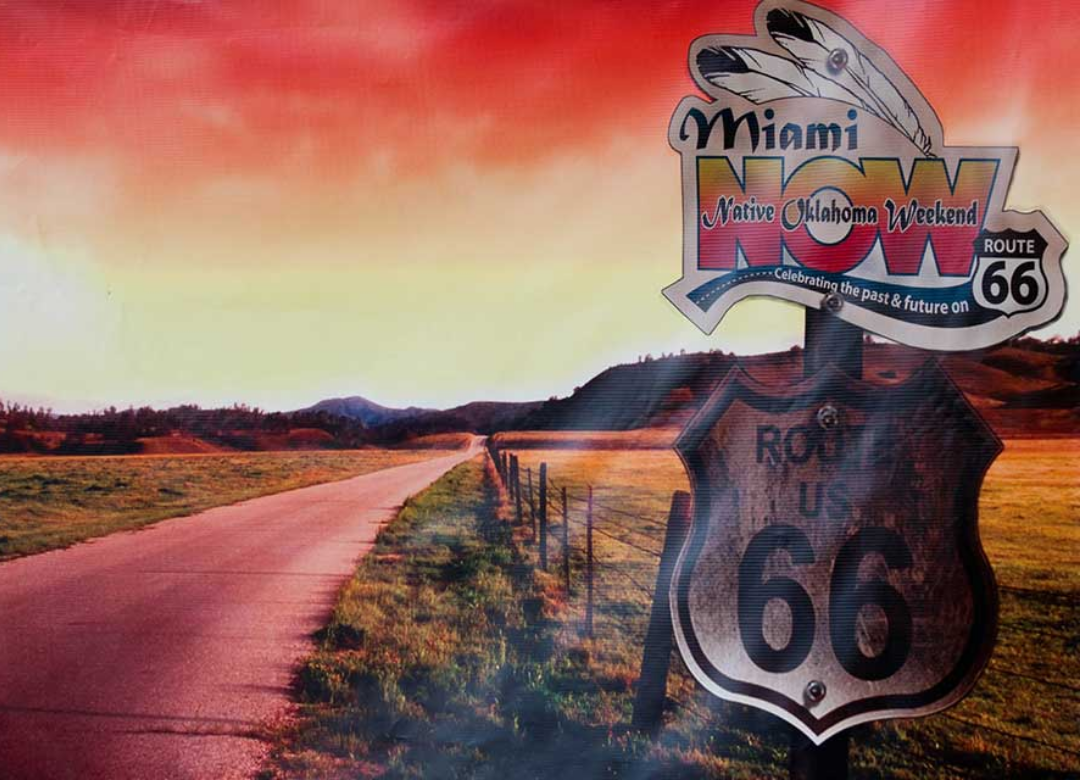
Prof. Wesley Leonard published an article, “Eradicating the e-Word: Musings on Myaamia Language Reclamation,” in World Literature Today. Excerpt below:

Notions of Native American languages “disappearing,” “vanishing,” or “become e——” reflect broader and powerful colonial logics that render Native Americans into objects of history and deem illegitimate anything that misaligns with dominant society’s ideas about “authentic” Native American cultures and languages. Through this line of thinking, speaking a Native American language doesn’t necessarily count as evidence of its vitality. Even after twenty-five years of myaamia language reclamation, some scholars continue to describe myaamia with the e-word, and somebody always reverses the corrections I make to the Wikipedia entry for myaamia. (As of this writing, it includes the e-word, though there is ironically also mention of myaamia’s “revival.”)

It’s true that there are many Miamis who have not learned to speak myaamia, and perhaps never will. However, they now have some connection to their language and can choose to learn it. This is tremendously important given the historical context: not long ago, the more common situation in my community was a lack of connection to myaamia, and even the minority who felt connected to it didn’t have access to it. When focusing on Native American and other Indigenous languages, as often occurs in theories of language endangerment and recovery, people easily miss this and similar details. Reclamation requires that one ask whether community members feel connected to and have access to their languages. Reclamation intervenes in the underlying causes of Native American language shift rather than in the languages themselves.

One of the major underlying causes of myaamia language shift was two forced removals of my ancestors—first from the original Miami homelands in Indiana to Kansas, and later to Oklahoma (then Indian Territory). There are accounts of my ancestors taking handfuls of Indiana dirt with them, which is not surprising given that Miami culture significantly reflects a relationship with these homelands. Today, in addition to reconnecting to original homelands by having language programs there, my community addresses dislocation from land by using land-based pedagogies to teach myaamia and by naming new Miami spaces in myaamia. I keep in my own house a gift from our tribal chief: a vial with dirt from Indiana, Kansas, and Oklahoma.

Photo by klaxtonphoto / Flickr

youtube placeholder image

Tweaking the Traditional: Spotlight on Prof. Gerald Clarke

Faculty News Video/Audio

Palm Springs Life published a profile on Prof. Gerald Clarke and his Palm Springs Art Museum online exhibition “Gerald Clarke: Falling Rock.” Excerpt below:

The dirt road leading to the home and art studio of Gerald Clarke begins at State Route 371 in Anza, a mountain community 40 miles southwestof Palm Springs. Flanked by the Cahuilla Casino and the Cahuilla Band of Indians’ modest tribal offices, the narrow path is the inconspicuous gateway to a 19,000-acre reservation steeped in centuries of history but populated with only about 50 houses; two-thirds of the tribe’s 300 members live off the reservation. Clarke knows every sliver of this land, every critter and every plant — the stinging nettles (“They sting like hell, but we eat those”), tobacco (“We have songs about it”), elderberry trees (“The berries are edible, you can make flutes out of the wood, but the leaves, they’ll kill you”).

“T.E.K., they call it: traditional ecological knowledge,” he says.

Clarke also knows every lingering remnant of the tribe’s history here — the Catholic church (originally a schoolhouse) where a Bureau of Indian Affairs officer was fatally shot in 1909, the hot springs where his family bathed until they got running water in 1986 (“My dad would say, ‘People in Palm Springs pay hundreds of dollars to do what you’re doing.’ ”), the old ramada where tribal members once sang bird songs, and the cemetery where he and the men of the tribe still dig graves by hand. “Burial came with the Catholics,” he says, adding that traditional cremation is returning to favor.

Although he and his sister grew up in Hemet and Orange County, his father, Gerald Clarke Sr., picked them up on weekends and hosted them for summers on the reservation. “I grew up doing the cowboy stuff,” the younger Clarke says. “I learned early on that stereotypes are bullshit. My grandpa and my dad were hardcore Indian cowboys.”

For his part, Clarke was passionate about learning. He went to college and earned master’s degrees in painting and sculpture from Stephen F. Austin State University in Nacogdoches, Texas. He became an educator, knowing all along that his heritage would eventually lead him back to the reservation. “From the time I was very young, I knew it was my role to take over the ranch after my dad died,” he says. That day came in 2003, when Clarke was teaching studio art at East Central University in Ada, Oklahoma. He gave up his position, returned to the ranch, and began teaching part time at Idyllwild Arts, where he later became chairman of the visual arts department.

“The house I live in is 100 years old; my grandpa built it and ran things. He passed away, and my dad ran things. And now I’m … shopping for a bull,” he says, driving by a pasture and pointing out one of two steers he and his brother-in-law will butcher, providing his family with meat for a year.

Clarke has emerged as a tribal leader, and he’s back on the tenure track as an assistant professor of ethnic studies at the University of California, Riverside. But neither he nor his tribe is stuck in a time warp; the reservation has plenty of modern amenities: a bright-white internet repeater towering on a hillside, a softball field situated across from a new ramada, solar panels on several rooftops, and Clarke’s art studio, a Quonset structure he built two years ago.

Read the full article here.